The Infrastructure Time Bomb
America’s infrastructure is aging all at once, and the skilled workforce required to maintain it is disappearing. The result is an infrastructure time bomb — a crisis created not by sudden disaster, but by decades of quiet, accumulated neglect.
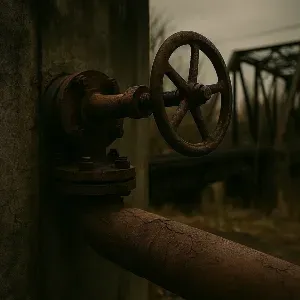
Every civilization builds. The question is whether it can maintain what it has built.
America is entering an era where the answer is increasingly uncertain.
Not because of a single catastrophic failure, but because of thousands of small ones: slow leaks, delayed repairs, aging systems, and a shrinking workforce unable to keep pace with the demands of a vast, aging infrastructure.
This is the infrastructure time bomb: a crisis created not by sudden disaster, but by accumulated neglect.
I. The Age of Everything
Much of America’s infrastructure was built in a burst of mid‑20th‑century ambition:
- highways
- bridges
- dams
- power plants
- water systems
- transmission lines
- rail networks
- public buildings
These systems were designed for a 50‑ to 75‑year lifespan.
We are now past that window.
The physical world is aging all at once — and the bill for deferred maintenance is coming due.
II. The Illusion of Permanence
Modern life creates the illusion that infrastructure is permanent.
The lights always come on.
The water always flows.
The roads are always there.
The grid always hums.
But these systems are not permanent.
They are maintained or they fail.
And maintenance requires:
- skilled labor
- institutional memory
- political will
- consistent funding
- long‑term planning
All of which are in short supply.
III. The Workforce Bottleneck
Even when money is available, the work cannot be done without people.
And the people are disappearing.
The average age of:
- a power‑line worker is over 50
- a water‑system operator is over 55
- a bridge inspector is nearing retirement
- a heavy‑equipment mechanic is in his late 40s
- a master electrician is in his 50s
The infrastructure crisis is not just about aging systems.
It is about the absence of the people who know how to repair them.
IV. The Cost of Delay
Deferred maintenance is the most expensive kind.
A $1 repair today becomes a $10 repair tomorrow and a $100 replacement next year.
But because the failures are quiet…a small leak, a hairline crack, a sagging line…they are easy to ignore.
Until they aren’t.
When infrastructure fails, it fails suddenly:
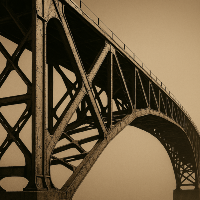
- a bridge collapses
- a water main bursts
- a substation overloads
- a dam cracks
- a transformer explodes
The time bomb is not the failure itself.
It is the decades of neglect that made the failure inevitable.
V. The Fragility of Complexity
Modern infrastructure is more complex than the systems it replaced.
A 1950s water plant could be repaired with wrenches and welders.
A modern plant requires:
- electricians
- programmers
- machinists
- pipefitters
- instrumentation technicians
- SCADA specialists
When even one of these roles is missing, the entire system becomes fragile.
Complexity without redundancy is vulnerability.
VI. The Cultural Blind Spot
We celebrate innovation.
We ignore maintenance.
We fund new projects.
We defer repairs.
We glorify the groundbreaking ceremony.
We forget the decades of stewardship required afterward.
A society that prefers novelty to upkeep will eventually find itself surrounded by broken things.
VII. The Foundry’s Mandate
The Foundry exists to name this crisis and to help rebuild the culture of maintenance that every civilization depends on.
We believe:
- Maintenance is not a cost. It is an inheritance.
- Infrastructure is not background. It is the stage on which life unfolds.
- Skilled labor is not optional. It is the backbone of national resilience.
- Apprenticeship is not nostalgic. It is necessary.
- A society that cannot maintain what it has built, cannot build what it needs next.
The infrastructure time bomb is real.
But it is not destiny.
With skilled hands, restored pathways, and a renewed culture of stewardship, the clock can be reset.
This is the work ahead.
This is the work of The Foundry.