The Dignity of Maintenance
Maintenance is not the opposite of progress, it is progress sustained over time. Modern culture glorifies novelty and ignores upkeep, but a civilization survives not because of what it builds, but because of what it maintains. The Workshop exists to restore the dignity of this essential work.
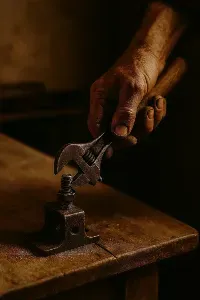
Every society celebrates what it builds. Few celebrate what it maintains.
We praise innovation, disruption, and creation, the dramatic moments when something new appears. But the quiet work of upkeep, repair, and stewardship is what determines whether a civilization endures.
Maintenance is not the opposite of progress.
Maintenance is progress, sustained over time.
If The Crisis showed what happens when maintenance collapses, The Workshop begins the work of restoring its dignity.
I. The Invisible Backbone
Maintenance is the most essential work in any society, yet it is the least visible.
It is the work that:
- keeps water clean
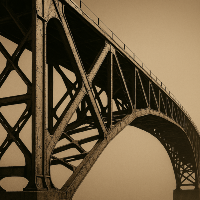
- keeps bridges standing
- keeps power flowing
- keeps buildings safe
- keeps machines running
- keeps communities functioning
When maintenance is done well, nothing dramatic happens.
And because nothing dramatic happens, we forget to honor it.
A civilization survives not because of what it builds, but because of what it maintains.
II. The Cultural Decline of Upkeep
Over the last half‑century, maintenance has been culturally downgraded.
We have:
- glorified novelty
- dismissed trades as “fallbacks”
- outsourced repair to distant specialists
- replaced instead of restored
- built systems too complex to maintain
- treated upkeep as an afterthought rather than a responsibility
The result is a society that knows how to acquire but not how to sustain.
This is not just inefficient.
It is dangerous.
III. Maintenance as Formation
Maintenance is not merely technical.
It is moral.
It teaches:
- patience
- responsibility
- attention
- humility
- foresight
- care
To maintain something is to say:
“This matters enough to preserve.”
Maintenance forms character because it requires commitment to something beyond the moment.
IV. The Masculine Role in Stewardship
Historically, men played a central role in maintenance, not because women were incapable, but because societies relied on men to carry the physical, technical, and protective burdens of upkeep.
As male formation has collapsed, so has the culture of maintenance.
This is not a grievance.
It is a structural reality.
When men lose their sense of responsibility, the world around them begins to fray.
Rebuilding maintenance requires rebuilding the men who perform it.
V. The Economics of Neglect
Deferred maintenance is the most expensive form of denial.
When we avoid upkeep:
- costs multiply
- systems fail
- risks escalate
- communities suffer
- trust erodes
A society that refuses to maintain what it has will never be able to build what it needs.
VI. The Workshop as a Culture of Care
A workshop, literal or symbolic, is a place where maintenance is honored.
It is where:
- tools are cared for
- spaces are kept orderly
- skills are passed down
- repairs are routine
- stewardship is expected
The workshop is not just a place of production.
It is a place of preservation.
VII. The Foundry’s Mandate
The Foundry exists to restore the dignity of maintenance, not as a nostalgic ideal, but as a civilizational necessity.
We believe:
- Maintenance is not low-status. It is foundational.
- A society that honors upkeep honors its future.
- Young men need roles that matter, and maintenance matters.
- Stewardship is the antidote to decay.
- Renewal begins with caring for what we already have.
The dignity of maintenance is not theoretical.
It is practical, essential, and within reach.
This is the work ahead.
This is the work of The Workshop.