The Community as Workshop
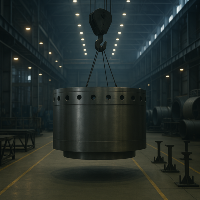
A workshop is not just a place but a pattern, a structure of shared work, intergenerational transmission, proximity, continuity, and responsibility. Modern communities have lost this pattern. The Workshop exists to help rebuild it.
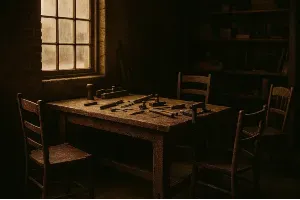
A workshop is not just a place. It is a pattern.
It is a space where people gather to work, to learn, to transmit, and to repair.
It is where competence is built, character is formed, and belonging is sustained.
A healthy community is a workshop.
A broken community is a workshop that has been abandoned.
If The Crisis showed what happens when communities fracture, The Workshop begins the work of rebuilding them, not through slogans, but through structure.
I. What a Workshop Actually Is
A workshop is defined not by its tools, but by its relationships.
It is a place where:
- masters teach
- apprentices learn
- work is shared
- skills are transmitted
- responsibility is expected
- memory is preserved
A community becomes a workshop when it adopts this pattern.
II. The Collapse of Communal Transmission
Modern communities have lost their workshop structure.
We have:
- replaced mentorship with content
- replaced shared work with shared consumption
- replaced proximity with platforms
- replaced continuity with churn
- replaced responsibility with entertainment
The result is a generation of young people who want to learn and a generation of elders who want to teach, but no structure connecting them.
This is the transmission gap.
III. The Elements of a Workshop Community
To rebuild community as workshop, we need five elements:
1. Shared Work
Not just shared interests, shared tasks, shared goals, shared burdens.
2. Intergenerational Structure
Older members must guide. Younger members must commit. Transmission must be expected.
3. Physical Proximity
Digital connection is not enough. Communities must gather, work, and dwell together.
4. Rhythmic Continuity
Weekly, monthly, seasonal rhythms that allow memory to accumulate and identity to form.
5. Moral Expectation
Communities must expect growth, responsibility, and contribution…not just attendance.
IV. Why This Matters Now
We are entering an era of:
- institutional fragility
- demographic decline
- cultural fragmentation
- male drift
- skill collapse
- civic erosion
No single program can solve this.
Only communities, structured as workshops, can transmit what a civilization needs to endure.
V. The Foundry’s Mandate
The Foundry exists to help rebuild communities as workshops, not as nostalgic gestures, but as civilizational infrastructure.
We believe:
- Transmission is not optional. It is survival.
- Communities must be structured for formation, not just fellowship.
- Young people need more than content. They need context.
- Elders are not obsolete. They are essential.
- The workshop is not just a metaphor. It is a model.
The community as workshop is not theoretical.
It is practical, structural, and within reach.
This is the work ahead.
This is the work of The Workshop.