Let It Burn: A Small Story About a Big Collapse
A fire department was told not to fight fires. A water system couldn’t supply water. A town discovered that the institutions it assumed were solid were, in fact, hollow.
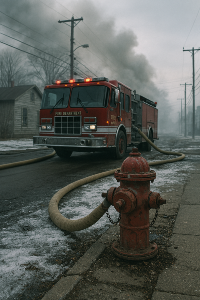
In Franklin County, Pennsylvania, a barn caught fire on a bitter January morning. The draft sites were frozen solid, so firefighters did what any department would do: they hooked into the nearest hydrant. The barn was lost, but they kept the fire from spreading. They did their job.
The next day, the fire chief received a call from the local water authority. The message was simple, and astonishing:
Do not use the borough hydrants again.
If a building catches fire, let it burn.
The authority later tried to walk it back, but the chief was clear: this wasn’t a misunderstanding. The water system is old, under‑capacity, and unable to maintain pressure. Hydrants have been removed without notice. The infrastructure that once supported a functioning town has been quietly failing for years.
This is how the small world collapses.
Not with a dramatic event, but with a phone call.
A fire department is told not to fight fires.
A water system can’t supply water.
A town discovers that the institutions it assumed were solid are, in fact, hollow.
People often imagine institutional decay as something abstract...a political argument, a budget debate, a distant crisis. But it shows up in the most ordinary places: a hydrant that doesn’t work, a water system that can’t support pressure, a fire chief being told to stand down.
These are the early warning signs of a manpower crisis and an infrastructure crisis converging. Fewer workers, aging systems, shrinking budgets, and a culture that no longer remembers how much maintenance a civilization requires.
A barn fire in Pennsylvania is not a national headline.
But it is a preview.
When the small world fails, it fails quietly, until the moment it doesn’t.