How America Lost the Builders Who Held It Together
America’s infrastructure still stands, but the lineage of builders who once maintained it has thinned to the point of fragility. This essay traces how a nation that depended on skilled hands slowly lost the people who knew how to keep its foundations alive.
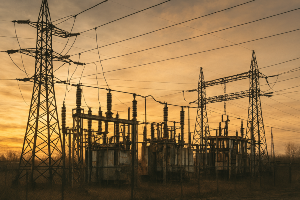
How America Lost the Builders Who Held Its Foundations Together
I. The Inheritance We Forgot
We live inside systems we did not build. The roads beneath our tires, the wires above our heads, the water that arrives on command. All of it was constructed by men whose names we will never know, and whose work we rarely think about. Modern life runs on an inheritance that came from a generation that understood hard things, and we have grown so accustomed to its reliability that we’ve forgotten the hands that made it possible.
For most of American history, infrastructure wasn’t an abstraction. It wasn’t a policy category or a budget line. It was a physical project carried out by men who had returned from war with a sense of duty, discipline, and competence. Men who knew how to build because they had lived through destruction. They laid pipe, raised steel, wired substations, poured concrete, and stitched together the networks that would become the backbone of a rising nation.
Their work was not glamorous. It was not celebrated. But it was understood to be essential. And because it was essential, it was honored...not with parades or speeches, but with something quieter and more durable: respect.
That respect has faded. The inheritance remains, but the memory of how it was made...and who made it...has slipped out of view. We live in a country built by people who assumed their descendants would maintain what they created. Instead, we have allowed the lineage to fray.
This essay is about that lineage: how it was formed, how it was passed down, and how it broke. It is the story beneath our present fragility...the forgotten foundation of a civilization that once knew how to build, repair, and renew itself.
II. The Builders: A Generation Forged in Hard Things
The men who built America’s infrastructure did not come from comfort. They came from barracks, from shipyards, from frozen forests and burning beaches. They returned from war with calloused hands, disciplined minds, and a quiet understanding that nothing worth having maintains itself. They had seen what happens when systems fail, and they carried that knowledge into the work of building a nation that would not.
The GI Bill opened the door to trades that would define the next half‑century: electricians, linemen, welders, machinists, pipefitters, carpenters, mechanics, surveyors. These were not fallback jobs. They were the backbone of a rising industrial power. The men who took them were not “labor” in the modern, diminished sense of the word. They were craftsmen, maintainers, and stewards of the physical world.
They built roads that tied the continent together. They erected transmission towers across mountains and plains. They laid the pipes that carried water into every home and the conduits that carried power to every factory. They wired the substations, poured the concrete, raised the steel, and stitched together the networks that made modern life possible.
And they did it with an ethic that is almost foreign to us now:
You leave the system stronger than you found it.
There was no romance in this work. No spotlight. No social currency.
But there was dignity. The kind that comes from competence, responsibility, and contribution. These men didn’t talk about “nation‑building.” They simply built the nation.
Their legacy is not a myth. It is the physical reality we still inhabit.
Every bridge, every water plant, every rail line, every substation, all of it traces back to a generation that understood hard things and did them anyway.
This was the foundation of the lineage.
And for a long time, it held.
III. Communities Built Around Work
Before America became a nation of screens, it was a nation of shop floors, rail yards, mills, and substations. Communities weren’t built around amenities or branding. They were built around work...real work, physical work, the kind that left a mark on the landscape and on the men who did it.
Every region had its backbone.
A paper mill. A refinery. A rail hub. A factory that made parts no one outside the county had ever heard of but that kept half the country running. A utility yard where linemen launched into storms without hesitation. These places weren’t just employers. They were the gravitational centers of entire towns.
The men who worked in them formed the civic core. They coached Little League, ran the volunteer fire departments, fixed their neighbors’ roofs, and kept the local VFW alive. Their schedules shaped the rhythms of the community, shift changes, whistle blows, the hum of machinery rolling through the night. The work was demanding, but it created something rare: a shared sense of purpose.
Families grew around that stability.
Schools were funded by it.
Churches were filled by it.
Main Streets were kept alive by the paychecks earned in those plants and yards.
And because the work was visible...because you could see the men who kept the lights on, who repaired the roads, who welded the beams...competence carried social weight. A man who knew how to fix things was not just useful. He was respected. He was part of the fabric.
This wasn’t nostalgia. It was structure.
A community built around contribution is a community that knows what it stands on.
For decades, this was the American pattern:
physical work → stable families → strong communities → a culture that honored the people who held it together.
It wasn’t perfect. Nothing human ever is.
But it was coherent. It was durable. And it created a lineage of builders who understood that their work mattered. Not just to their employers, but to the towns that depended on them.
That world didn’t vanish overnight.
But the forces that would unravel it had already begun to gather.
IV. The Chain of Transmission
For generations, the strength of American infrastructure didn’t come from manuals or policies. It came from people. Skills were not primarily taught in classrooms; they were handed down in the field, shoulder‑to‑shoulder, from someone who had done the work for decades to someone who was just beginning.
A young man didn’t learn to wire a substation by reading about it.
He learned by standing next to someone who had wired a hundred of them.
A new hire didn’t learn to weld pressure pipe from a video.
He learned from a foreman who could hear a bad bead before he could see it.
This was the quiet architecture of continuity:
knowledge passed through proximity, repetition, and trust.
Every trade had its elders. Men who carried the institutional memory of how things were built, why they were built that way, and what would happen if they weren’t maintained. They didn’t think of themselves as “knowledge workers,” but that’s exactly what they were. They held the operating system of the country in their heads and hands.
And they took seriously the responsibility to train the next generation.
Not because it was mandated.
Not because it was incentivized.
But because they understood that the system only survived if someone younger learned how to keep it alive.
This chain of transmission created more than competence.
It created identity.
A young man didn’t just learn a skill, he inherited a place in a lineage. He became part of something older and larger than himself, something that would outlast him if he did his part.
For decades, this was how America maintained itself:
one generation teaching the next, not just how to work, but how to carry responsibility.
It was a fragile system, even then.
It depended on continuity, on respect, on the belief that the work mattered.
And when those cultural conditions began to shift, the chain began to fray.
V. The Great Drift: How We Lost the Trades
The break didn’t happen all at once. It began quietly, almost imperceptibly, as the country shifted its attention from the physical world to the abstract one. For decades, the trades had been the backbone of American life, visible, respected, and essential. But as the economy changed, so did the culture, and the work that once defined entire communities began to fade from view.
The first shift was ideological.
A new narrative took hold: that success required a degree, that college was the only respectable path, and that the trades were a fallback for those who couldn’t “do better.” Guidance counselors repeated it. Parents absorbed it. Schools reorganized around it. Shop classes closed. Vocational programs shrank. The pipeline that had once carried young men into skilled work narrowed until it became a trickle.
Then came the cultural shift, quieter, but deeper.
The fading respect for the men whose physical labor built and sustained the nation’s infrastructure and the loss of cultural honor around manual competence.
The work didn’t change. The systems didn’t change. But the way society saw the people who maintained them did. The men who kept the lights on, who repaired the roads, who climbed poles in storms, who welded the beams and fixed the pumps, became invisible in a culture increasingly obsessed with screens, branding, and knowledge work.
The internet accelerated the drift.
A generation grew up believing that the real action was online, that value lived in code, content, and clicks. Physical work became something distant, something other people did, something beneath the horizon of daily life. The trades were no longer seen as a civic inheritance. They were seen as an anachronism.
Manufacturing left.
Local factories closed.
The plants and mills that had anchored communities for decades went dark.
And with them went the apprenticeship pathways that had carried skills from one generation to the next.
The country didn’t just lose jobs.
It lost identity.
It lost continuity.
It lost the cultural scaffolding that had once supported the builders and maintainers of the physical world.
By the time anyone realized what was happening, the drift had already become a divide. A widening gap between a society that still depended on physical systems and a culture that no longer valued the people who kept those systems alive.
The lineage hadn’t snapped yet.
But it was beginning to fray.
VI. The Screen‑Bound Generation
The first generation to grow up entirely inside the digital world is now coming of age. They have never known a life without smartphones, streaming, or instant access to information. They move through a landscape of screens with fluency that would have seemed like science fiction to their grandparents. But fluency is not the same as grounding, and the digital world has a way of obscuring the physical one beneath it.
For Gen Alpha, the infrastructure that supports their lives is invisible. Electricity is assumed. Water is assumed. Connectivity is assumed. The physical systems that make their world possible operate so reliably, and so far out of sight, that they might as well be magic. And when something feels like magic, it rarely feels like responsibility.
Childhood has changed, too.
Where earlier generations learned about the world through physical exploration...climbing, building, breaking, fixing...today’s children learn through interfaces. Their hands are quick, but not necessarily strong. Their attention is wide, but not necessarily deep. Their days are spent in environments that require almost no physical competence and offer almost no apprenticeship into the real world.
This isn’t a moral failing. It’s a structural one.
A generation raised in a digital substrate will naturally gravitate toward digital skills. But the result is a widening gap between the world they inhabit and the world that sustains them. They are growing up in a civilization built by people who understood hard things, yet they are being prepared for a future that assumes those hard things will simply continue to function on their own.
The apprenticeship pathways that once carried young men into the trades have thinned to the point of disappearance. Few children today know someone who works with their hands. Fewer still have seen the inside of a substation, a machine shop, or a plant. The physical world has become abstract, something encountered only when it fails.
A society can survive a generation that forgets its history.
It cannot survive a generation that forgets its foundations.
Gen Alpha is not to blame for this. They are the product of a culture that drifted away from the physical world and never taught them how to return to it. But the consequences of that drift are becoming impossible to ignore.
The lineage is no longer fraying.
It is nearing a break.
VII. The Consequences of a Broken Lineage
A civilization can drift for a long time before the consequences become visible. Systems built by stronger generations have a way of masking the weakness of the ones that follow. Infrastructure ages slowly. Skills erode quietly. Institutional memory fades without ceremony. And for a while, everything still works, until it doesn’t.
Across the country, the signs are everywhere.
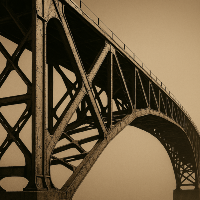
Water systems built in the 1950s and 60s are failing faster than they can be repaired. Transmission lines sag under loads they were never designed to carry. Bridges built by men who assumed their grandsons would maintain them now wait for crews that no longer exist. Plants and substations run with skeleton staffs, their most experienced workers nearing retirement with no one behind them to inherit what they know.
This is what happens when a lineage breaks:
the systems remain, but the stewards disappear.
The workforce that once maintained the physical backbone of the country has thinned to historic lows. The average age of a skilled tradesman climbs each year. Apprenticeship programs struggle to attract young people who have never been shown the value, or the dignity, of physical competence. The knowledge that once passed naturally from one generation to the next now risks vanishing entirely.
And the fragility shows up everywhere.
In longer outages.
In slower repairs.
In deferred maintenance that becomes structural decay.
In the growing mismatch between what society expects and what it can actually sustain.
We are living in a country built by people who assumed their descendants would carry the work forward. Instead, we have allowed the chain of transmission to weaken to the point where entire systems now depend on a shrinking number of aging experts...men who hold in their heads the last unbroken threads of knowledge that keep the grid, the water, the roads, and the industrial base functioning.
This is not a crisis of technology.
It is a crisis of continuity.
A nation can survive aging infrastructure.
It cannot survive the loss of the people who know how to maintain it.
The lineage that once held America together has been stretched thin.
And unless it is restored, the systems built by stronger hands will continue to fail under the weight of a culture that no longer remembers how they were made.
VIII. The Call to Remember
The systems we inherited were built by people who understood that civilization is not self‑maintaining. They knew that roads crack, steel corrodes, water lines burst, transformers fail, and that nothing built by human hands lasts without human hands to care for it. They built with the expectation that their descendants would carry the work forward, not out of obligation, but out of pride.
We have reached a moment when that expectation can no longer be assumed.
The lineage that once passed skills, identity, and responsibility from one generation to the next has weakened. The physical world still stands, but the culture that sustained it has thinned to the point of fragility. And fragility, left unattended, becomes failure.
Remembering is not nostalgia.
It is stewardship.
To remember the builders is not to idealize the past.
It is to recognize the foundation on which the present rests and to accept the responsibility of maintaining it. A society that forgets its builders forgets how to build. A society that forgets its maintainers forgets how to endure.
The work ahead is not about recreating an old world.
It is about restoring the chain of transmission that allowed a nation to function, grow, and repair itself. It is about honoring the men whose labor held the country together by ensuring that their knowledge, their ethic, and their sense of duty do not vanish with them.
This is the mission of The Foundry:
to recover the culture of competence, to rebuild the pathways of apprenticeship, and to remind a drifting nation that its future depends on the people who know how to keep its foundations intact.
The inheritance is still here.
The question now is whether we will remember how to carry it.